Episode 143: Top Tips You Don't Want to Miss




Ep. 143
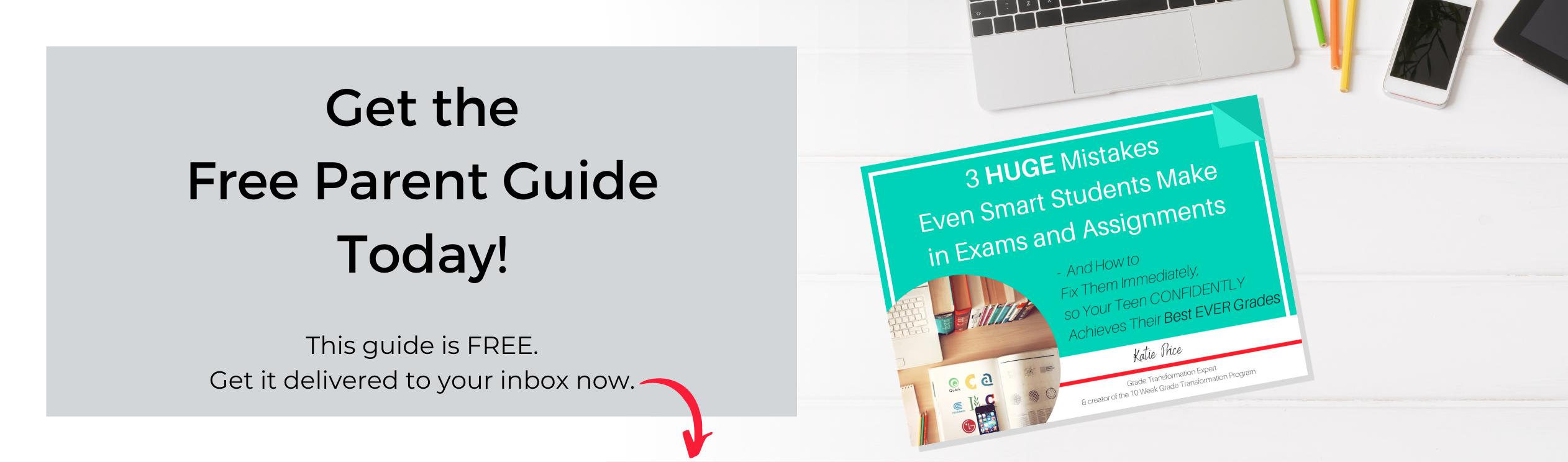
→ Get the Free Parent Guide: 3 Huge Mistakes (Even Smart!) Students Make in Exams and Assignments - and how to fix them immediately so your teen confidently achieves their best ever grades.
___
The tips, insights and examples that may have flown under your radar this year, but I think you and your teen really, REALLY need to know.
Listen in to discover:
How to figure out what's actually important in creative and extended tasks - so your teen knows where to focus their time and effort.
The one question that'll tell you whether or not your teen would benefit from a tutor - so you don't waste your money or your teen's time.
The overlap between skills that creates a double-whammy positive impact to save time and increase results.
Why and how your teen needs to switch from 'writing about' to 'responding to' any exam question.
And much more!
FEATURED ON THE SHOW:
Episode 118: What's The Point? (No, really - what is it?)
Episode 140: How to Figure Out the Focus of an Assignment
Episode 18: The Truth Behind Creative tasks
Episode 12: Does Your Teen Need a Tutor?
Episode 24: The Skill Web
Episode 114: Don't 'Write About', 'Respond To'
Follow Rock Solid Study on Facebook
Follow Rock Solid Study on Instagram

TRANSCRIPT:
You’re listening to The Parents of Hardworking Teens Podcast, episode 143 - the tips, insights and examples that may have flown under your radar this year, but I think you and your teen really, REALLY need to know.
Hey VIP’s.
Merry Christmas - and happy summer holidays for those of you in the southern hemisphere! Now we all know what this time of year means…
Stats, evaluation, reviews and planning.
Or maybe that’s just me.
Yep. Just me.
It’s okay - I love this sort of stuff.
Now one of the things I review is what podcast episodes you’re most enjoying, listening to the most and finding most helpful.
So, I take a look at all the download and listen stats and your feedback - thank you to all of you who’ve emailed me this year telling me what you’ve found helpful, what you’ve used with your teen and their study. I always LOVE getting your emails. And those of you who’ve done this will know, that I almost always reply with something else I think you’ll find helpful given what you’ve shared. A free guide, resource, another episode that ties in nicely. Etc.
I can’t help myself. Great that you have this - now please make sure you also have this. Now I know that sometimes podcasters will do a bit of a ‘best of’ summary review at the end of the year based on the most popular episodes. But in the name of being strategic and effective - I figured, well, if they’re the most downloaded and listened to, then you’ve probably already heard them!
So, in the name of hey - if you found this helpful, then you’ll definitely also want or need this, then I’m actually going to share some of the tips and episode highlights that based on what you clearly already like, want and need, I would also recommend for you and your teen. Because there were some that I expected to be there and there were some that I was suprised weren’t in the top end of the list. Because I know how critical and important they are - and I know how little theyre known or understood. (Remember I’ve just marked a mass load of external exams - and worked with over a hundred students in my coaching programs throughout the year. I know what students are and arent’ doing, what they are and aren’t understanding and showing in their work.)
And - to be honest - it might just be that I gave the episode a rubbish title. One that just doesn’t appeal. And that’s on me.
So here I’m going to share some of the lesser-known but in my professional opinion much needed concepts and tips - and the episodes where I’ve shared them, so you can go give them a full listen and get the full details and help if you wish over this summer break while you likely have a long car drive or other time to listen that you normally might not. I know - this podcast isn’t exactly the soundtrack to a summer holiday Christmas drive, but hey - I just want you and your teen to have these okay - so however you make it happen. That’s up to you.
So let’s dive in - the under the radar but top priority tips for 2025 into 2026 are:
Number 1) Is from episode 118: What’s the point - No realy, what is it?
Because this is something I’ve been talking about a LOT this year - on consults, on accelerator calls, in coaching sessions and even in my member seminars and workshops. For those of you who are members: I’m talking about the Booster seminar in the Study Vault: Knowing what to prove to the marker. In there I get into how your teen can actually work this out for themself, for any task, but for now, here on the podcast, I’m going to share WHY they need to.
When I say ‘what’s the point?’ I mean in relation to assignments, investigations and extended tasks.
Like - the design an outfit for Lady Macbeth, English task - which you’ll hear about in episode 118. Like - the photo story assignment for geography - which you can hear about in episode 140: How to figure out the focus of an assignment Like - creative tasks such as short story writing - which you can hear about in episode 18: The truth about creative tasks. Because the point is to demonstrate certain knowledge and skills related to the subject or topic. It’s about applying those things in or to a particular context. The actual output - the story, the dress design, the photo story, whatever it is, is just the vehicle to be able to demonstrate those things.
So this episode 118 will help you and your teen make sure they’re putting time and effort into the elements of their assignment that will actually earn them credit and gain marks, and ensure they don’t end up spending a ton or time and effort on things that won’t. And this is important because one of the main issues I’m hearing from students and their parents right now is how much time they’re spending on their study, and I believe, that for most hardworking students this could be drastically reduced, without negatively impacting their results, and in fact, increase them at the same time.
My next priority tip that may have flown under your radar is from Episode 12: Does your teen need a tutor?
Now, I’ve included this one on this list right now as this might be something that’s gone through your head thinking ahead to next year? Perhaps if some of your teen’s results haven’t been where they want them to be, or you know they could or should be as you know their ability and the effort they’ve put in.
Now, I wonder whether the title makes it sound like I’m going to sell tutoring? So in hindsight, maybe that wasn’t a great title, because that’s kinda the opposite of what this episode is all about.
Because what I’ve found, for many capable and hardworking teens, is that getting tutoring for a specific subject, like say English or Maths, is often not the thing that’ll make the biggest difference for them, because it’s not their subject knowledge that’s holding them back.
It’s their ability to convey that knowledge in the way the question or task demands and the mark scheme requires. And that doesn’t come from understanding the Shakespeare text better, or just practicing more simultaneous equations. Not that those things aren’t important, but if we’re fixing something other than the weakest link, then it’s like putting more fuel into the car that has no wheels. My original analogy for all of this. We think the car needs more fuel. But what we haven’t noticed is that the wheels are missing. So more fuel is all good. But it’s not going to make much difference to the performance. Getting the wheel on is what’s going to catapult performance and outcomes - give you biggest bang for buck and your teen greatest return on effort.
I say this not because I have anything against tutors. I did tutoring way back when myself. It can be great IF subject knowledge - understanding the content and concepts they need to learn is the weakest link. In this case, subject knowledge is lacking, subject knowledge is the missing wheels. But what I also observed back when I was doing a bit of tutoring, is partly what led me to doing the work I do now. Just working on subject knowledge wasn’t enough. Or it wasn’t the thing that would move the needle.
So in that episode, I share specific questions and litmus tests if you like to help you determine whether your teen could benefit from a subject tutor, or if they actually need to build and master the skills and techniques to apply that knowledge. Whichever the answer is, - that’s the thing that’ll be the most effective and strategic place to put your money and your teen’s time and effort.
Okay -
Third Under the radar but top priority tip is from episode 24: The Skill Web.
Now - in reflection and evaluation mode, perhaps too vague a title here. BUT I had an email from a parent not long after releasing this episode saying how this had been their most impactful and most loved episode because it really represented their experience for their teen.
So, if you haven’t caught it, then I’d recommend it and you can see if it resonates.
In this episode I describe and explain the key skills I believe every student needs in order to succeed in exams and assessment - and do it in a confident, sustainable and consistent way. AND I explain how they all interlink, and how the whole is greater than the sum of its parts. How, when these layer and link together they further uplift and augment each other.
When you listen to this, you can then determine, which skills does your teen have and which do they need - or more accurately, because it’s never quite a black and white as that - to what extent they have mastery and confidence in each skill. And decide which they need to work in order to uplevel everything they already have.
And if you’re thinking - ah, there seems to be an overlap here with the previous recommendation and this theme of identifying weak links, good work. There is. Which is what this episode 24 is all about - how everything ties and works together. So definitely check this one out.
Okay - now I was going to stop at 3 because top 3 is a good traditional number, but you know me, always just one more thing: so christmas bonus time: we have under the radar yet high priority tip number 4 comes from episode 114: Don’t write about, respond to.
Now, I HAD to include this one, because it’s what pretty much ALL training around exam technique comes down to.
And that is, that most students are looking for and then writing about the TOPIC that comes up in a question. A character in a novel, a function within a Biological system, an event in History, a strategy used in Business, or Phys ed. And what I want students to be looking for and then responding TO is the command of the question. What is the question asking them to DO?
Do they need to state, describe, analyse, justify, decide, evaluate, name, outline…
ALL of these command words require your teen to do something different.
I just did a case study review call with Rosie, one of my Y12 coaching students - I’ll share her video with you in the new year - teaser :) - but she said and I’ll quote her words - “I knew what command terms were, but I didn’t understand that they warrant such a different response.”
I cannot tell you what a difference this makes to your teen when they know:
What command words are, how to identify them in a question, how to combine them with other words of the question - a full dissection - to discern exactly what the true command and level of response required really is.
HOW to actually craft a response at that level, with the right amount of detail and include specifically what’s required AND have the confidence to know what ISN'T - so they aren’t wasting time or word count on things that won’t even appear on the mark scheme and will just get read over and dismissed by markers - even though it might be factually correct.
So - I hope this small but mighty list of tips, insights and concepts that you might’ve missed is helpful. I hope you get or make time to catch some of these recommended episodes - and I apologise if you wish you’d had them sooner and it’s just because I gave them a not so juicy, not great title!
And finally, if, after this, you decide you’d love your teen to get the full training in all of these skills and strategies and techniques over this summer, then you can do exactly that with the 10 Week Grade Transformation Program
We have just released a NEW - updated and upgraded version of the 10 Week Grade Transformation program - 10WGT for short. All of the content has been fully reviewed and updated, refined and honed to make it as impactful, succinct and actionable as possible. The training videos, the workbooks and the accompanying exemplars, resources and activities have all gone through the filter of ‘is this as clear, usable, relevant as possible. And if so - it stayed - and if not, it got changed, updated or upgraded so that it is.
The 10WGT is the perfect exam technique, strategic study, training for your teen if they are great with their subject content but need the skills and techniques to put that across in the way the question or task requires and the mark scheme demands.
It’s available any time, but if they want to get ahead over summer while they’ve got more time and want to hit the ground running ready to start their next school year, then this is a great option.
No having to co-ordinate times or be online for a specific session. They get access to the whole training program immediately and get 12 weeks access - so they have 2 buffer weeks for maybe a break if you’re going on holiday, or just to recap and review anything they want to at the end.
All of the concepts and skills I discuss on this episode are in the 10WGT, and many many many more on top, that are critical to successful and sustainable study and performance in exams and assessment - this podcast selection of examples is just the tip of the iceberg.
So, that’s a wrap for this year, thank you so much for listening and an EXTRA huge thank you if you’ve shared or recommended this podcast to friends or family or given it a rating or review. I really appreciate it. I’ll wish you a merry christmas, a safe and super fun holiday break and I’ll see you back here in the new year - with some very exciting ways I’ll be helping and supporting your teen and even working directly with them if you choose.
Woohoo!

© 2026 Copyrights by Rock Solid Study | All Rights Reserved | Privacy Policy